Your car’s ignition system plays an essential role in getting you on the road. Whether you use a traditional key or a push-button start system, you rely on it to work every time you start your vehicle.
Unfortunately, ignition problems can develop gradually, often showing small warning signs before leaving you unable to start your car. A key that occasionally sticks, an ignition barrel that feels stiff, or an engine that refuses to start could all indicate something needs attention.
Understanding the most common ignition problems, what causes them, and how to prevent them can help you avoid unexpected breakdowns and potentially expensive repairs.
Not every starting problem means your ignition is faulty. The cause could be a worn key, a mechanical fault, an electrical issue, or a problem elsewhere in the vehicle.
Here are some of the most common issues drivers encounter and what you should do about them.
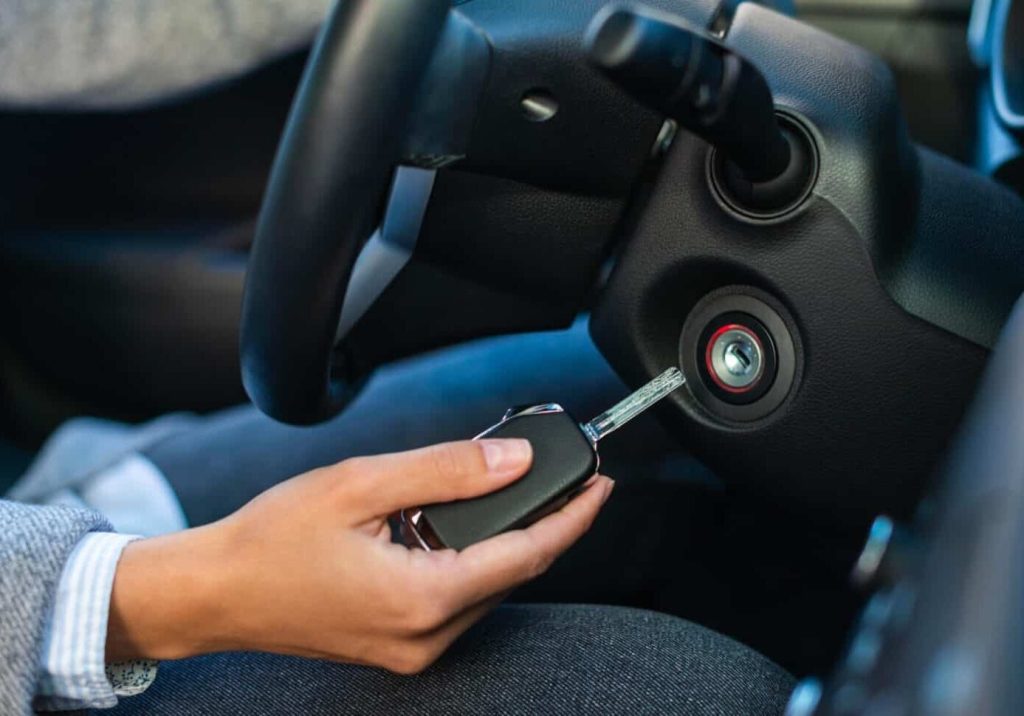
One of the most frustrating ignition problems is inserting your car key only to discover that it won’t turn.
This can happen for several reasons:
Steering wheel lock: The steering lock may be engaged, preventing the ignition from turning.
Worn car key: Over time, the grooves of a traditional car key can wear down, making it difficult for the ignition barrel to recognise the key mechanically.
Damaged ignition barrel: Internal components can become worn or misaligned, preventing smooth movement.
Dirt and debris: Contamination inside the ignition lock can interfere with its operation.
How to avoid it:
Avoid forcing the key when you feel resistance. If the steering lock is engaged, gently move the steering wheel while turning the key without excessive pressure.
Inspect your car key for visible wear or bending. If it frequently catches or requires several attempts to turn, arrange an inspection before the problem becomes worse.
A key that becomes difficult to remove is another common warning sign of ignition trouble.
Sometimes, the problem is straightforward. For example, automatic vehicles may prevent key removal unless the gear selector is properly positioned in Park.
In other cases, worn internal components, a damaged key, or a faulty ignition mechanism may be responsible.
How to avoid it:
Always ensure your vehicle is fully switched off and, where applicable, the gear selector is correctly positioned before removing the key.
Never pull aggressively on a stuck key, as it could snap inside the ignition barrel.
If the problem happens repeatedly, have the key and ignition mechanism checked by a qualified auto locksmith.
Your ignition barrel contains mechanical components that allow the correct key to turn and operate the ignition switch.
With regular use, these components can experience wear, causing the key to feel stiff, catch during rotation, or require extra movement.
Common causes include:
Worn internal pins or wafers.
A damaged or poorly cut car key.
Contamination inside the ignition barrel.
General wear from years of use.
How to avoid it:
Pay attention to changes in how your ignition feels. A key that previously turned smoothly but now requires extra pressure may indicate developing mechanical wear.
Avoid applying household oils or unsuitable lubricants inside the ignition, as these can attract dirt or interfere with its components.
A professional inspection can help establish whether the problem is with the key or the ignition barrel itself.
Sometimes, the key turns normally, but the engine doesn’t start.
Although this may appear to be an ignition problem, several different systems could be responsible.
Possible causes include:
A faulty ignition switch.
A weak or discharged vehicle battery.
A starter motor problem.
An immobiliser that doesn’t recognise the key.
An electrical fault affecting the starting system.
How to avoid it:
Notice what happens when you attempt to start the vehicle.
If the dashboard lights become unusually dim or you hear rapid clicking, the battery or electrical system may need attention.
If a security warning light appears, the vehicle may not be recognising your transponder key.
Avoid repeatedly trying to start the engine without identifying the cause. Have the vehicle diagnosed rather than automatically replacing the ignition barrel.
Traditional metal keys can weaken over time, particularly when they become bent, cracked, or heavily worn.
When additional force is applied to a stiff ignition, a weakened key can snap, leaving part of it trapped inside the barrel.
This can prevent you from starting the vehicle and may damage the ignition mechanism if the broken piece is removed incorrectly.
How to avoid it:
Regularly inspect your car key for signs of damage, including cracks near the blade or visible bending.
Replace a damaged key before it fails, and avoid using excessive force when turning it.
If your key breaks inside the ignition, don’t attempt to remove the fragment using sharp objects, glue, or improvised tools. An experienced auto locksmith can assess the problem and use suitable extraction equipment.
Some ignition faults are difficult to identify because they don’t happen every time you start the vehicle.
Your car might start normally in the morning but refuse to respond later in the day. Alternatively, the ignition may occasionally feel stiff before returning to normal.
Intermittent problems can result from worn mechanical components, loose electrical connections, faulty ignition switches, or key recognition issues.
How to avoid it:
Don’t ignore a problem simply because it disappears temporarily.
Keep track of when it occurs, whether any dashboard warning lights appear, and whether the problem changes when using a spare key.
These observations can help a professional identify the fault more efficiently.
Although some ignition faults develop through normal wear and tear, a few simple habits can reduce unnecessary strain on your ignition system.
A damaged key can affect how smoothly your ignition barrel operates.
Avoid bending your keys, using them to open packaging, or exposing electronic key fobs to excessive moisture.
If your key becomes worn or damaged, have it assessed and replaced before it causes further problems.
Carrying numerous keys and heavy accessories on the same keyring can put additional strain on a traditional ignition mechanism, particularly while driving.
Although it won’t necessarily cause immediate damage, keeping your car key on a lightweight keyring is a sensible precaution.
If your key doesn’t turn easily, forcing it is rarely the solution.
Excessive pressure can damage the key or internal components, potentially turning a minor fault into a more expensive repair.
Instead, check for an engaged steering lock and confirm you’re using the correct, undamaged key. If the resistance continues, seek professional assistance.
Not every ignition-related starting problem is mechanical.
A weak vehicle battery can create symptoms that resemble an ignition fault, particularly in cars with electronic ignition or push-button start systems.
Follow your vehicle manufacturer’s battery maintenance recommendations and have the battery tested if starting becomes unreliable.
Ignition faults rarely become more convenient with time.
A key that occasionally catches today could eventually become stuck, preventing you from starting your car when you need it most.
Arrange an inspection when you first notice a change in the ignition’s operation rather than waiting until the vehicle becomes unusable.
Not every faulty ignition barrel requires a complete replacement.
Depending on the cause and condition of the components, an auto locksmith may be able to repair the existing mechanism, resolve a key-related problem, or recommend replacing the ignition barrel.
For example, a worn key might be the actual reason your ignition is difficult to turn. In this situation, replacing the key could resolve the problem without changing the ignition barrel.
However, if the internal mechanism is significantly damaged or worn, replacement may be the more reliable long-term solution.
The most appropriate option depends on your vehicle’s make, model, ignition design, and the extent of the damage.
Some ignition issues can be resolved through simple checks, such as releasing a steering wheel lock or making sure the vehicle is in Park.
However, professional assistance is recommended if:
Your key repeatedly gets stuck in the ignition.
The ignition barrel becomes increasingly difficult to turn.
Your key has snapped inside the ignition.
A working key no longer operates the ignition correctly.
Your vehicle intermittently fails to recognise its key.
You suspect the ignition barrel needs repair or replacement.
An experienced auto locksmith can examine the key and lock mechanism, identify possible faults, and recommend an appropriate solution.
Seeking help early can prevent further damage and reduce the risk of being stranded.
Having trouble turning your car key, dealing with a stuck ignition, or worried that your ignition barrel may be failing?
H Locks provides professional mobile auto locksmith services across the West Midlands.
With years of experience, our team can diagnose ignition barrel problems and provide professional ignition repair or replacement services, depending on your vehicle’s requirements.
We come to your location, helping you avoid the inconvenience of taking your vehicle to a workshop when the fault can be resolved on-site.
Don’t wait until your ignition stops working completely.
Contact H Locks to request a free quote today to get professional assistance with your car ignition problems.