
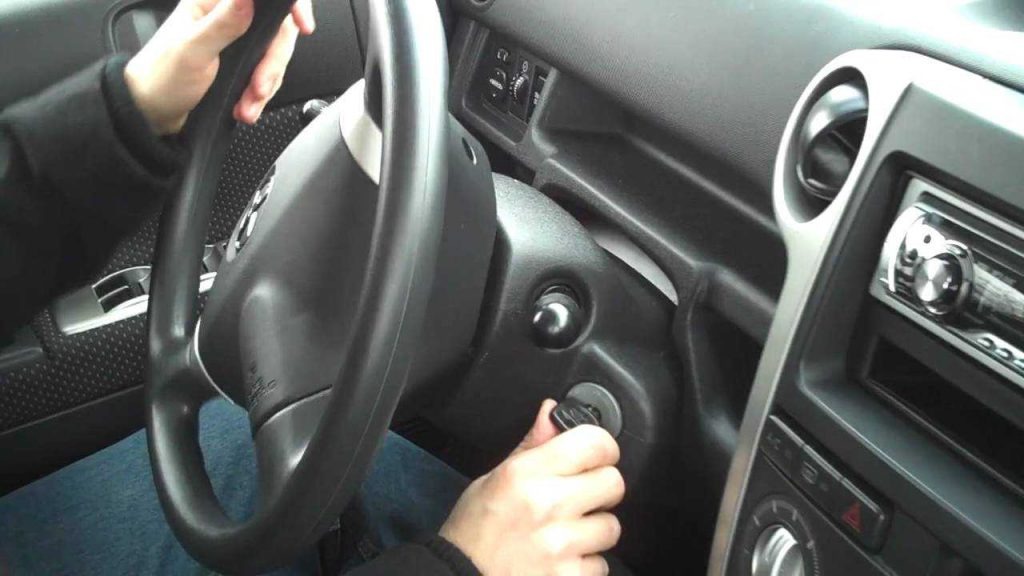
Few car problems are as frustrating as getting into your vehicle, inserting the key, and discovering that it simply refuses to turn. You may try again, move the steering wheel, remove and reinsert the key, or wonder whether the ignition has suddenly failed.
The good news is that a car key that won’t turn does not always mean you need a new ignition or an expensive repair. The cause can be as simple as steering-wheel lock pressure, an automatic transmission not fully in Park, or a worn key. In other situations, however, the problem may be inside the ignition lock cylinder, the key itself, or another part of the vehicle’s starting system.
In this guide, H Locks explains the common reasons why a key won’t turn in a car, what you can safely try yourself, how the problem differs between manual and automatic cars, how different types of car keys affect diagnosis, and when it is better to call an automotive locksmith.
When you insert a key into the ignition, the key and ignition lock cylinder must work together precisely. The correct key profile allows the lock’s internal components to align so that the cylinder can rotate.
Modern vehicles can add further layers to this process. Depending on the make, model, and age of the car, starting the vehicle may also involve a steering lock, transmission interlock, immobiliser, transponder chip, electronic ignition switch, or keyless-start system.
This means a key that won’t turn can have several possible causes. Before assuming the ignition is broken, it is worth checking the simplest possibilities first.
One of the most common reasons a car key won’t turn is pressure on the steering wheel lock.
Many vehicles are designed so that the steering wheel locks after the engine has been switched off and the key removed. If the steering wheel was turned or pressure was placed on it after parking, the steering lock can bind against the ignition mechanism.
You may notice that:
The key enters the ignition normally but will not rotate.
The steering wheel feels locked.
The steering wheel moves slightly in one direction but barely moves in the other.
The problem appeared suddenly even though the key worked normally before.
Insert the key into the ignition without forcing it. Gently move the steering wheel from side to side. You will usually find that it has slightly more movement in one direction.
Apply gentle pressure to the steering wheel in that direction while carefully attempting to turn the key.
The important word is gently. Do not aggressively twist the key or jerk the steering wheel. Excessive force can damage the key or ignition components.
If releasing pressure from the steering lock allows the key to turn, the ignition itself may be perfectly fine.
If you drive an automatic car, check the gear selector before investigating more complicated causes.
Many automatic vehicles have a safety system that prevents normal starting unless the transmission is in Park (P) or, on some vehicles, Neutral (N).
Sometimes the gear lever may appear to be in Park without being completely seated in the correct position.
Keep your foot on the brake and confirm that the gear selector is firmly in Park. You can move it out of Park and then place it back into Park before trying the key again.
On vehicles designed to start in Neutral, you may also test whether the vehicle behaves differently in Neutral. Always keep the brake applied and follow the starting instructions in your vehicle owner’s manual.
If moving the gear selector changes the problem, the issue may involve the transmission position or shift-interlock system rather than the physical key.
Manual cars have a different starting procedure.
Many manual vehicles use a clutch safety switch that requires the clutch pedal to be fully depressed before the engine will start. Depending on the vehicle, however, this usually affects whether the starter operates rather than whether a traditional mechanical ignition key physically rotates.
If your key turns but the engine doesn’t crank, make sure:
The vehicle is in Neutral.
The parking brake is applied.
The clutch pedal is fully depressed.
You are following the manufacturer’s normal starting procedure.
If the key physically refuses to rotate inside the ignition, a steering lock, worn key, ignition cylinder problem, or incorrect key is generally more relevant than the clutch pedal.
This distinction is important because “the key won’t turn” and “the key turns but the car won’t start” are different problems.
Car keys experience years of wear.
Every time a traditional key is inserted and removed, small amounts of material can wear from its cuts and edges. Eventually, a heavily worn key may no longer align the internal components of the ignition lock correctly.
Signs of a worn car key can include:
The key works only when positioned a certain way.
You have to wiggle it before the ignition turns.
It works in a door lock but struggles in the ignition.
The edges or cuts look noticeably rounded.
A spare key works significantly better.
If you have a spare key, this is one of the easiest diagnostic tests you can perform.
Try the spare without forcing it. If the spare turns smoothly while your everyday key does not, the original key is likely worn or damaged.
If possible, avoid repeatedly copying a badly worn key. A professional automotive locksmith may be able to determine the correct key specifications and advise on the appropriate replacement for the vehicle.
A slightly bent key can cause major problems inside a precision ignition lock.
Look along the key from different angles. Check for bending, cracks, chips, unusual wear, or other visible damage.
Do not force a damaged key into the ignition. More importantly, do not apply extra twisting force if it is already inserted.
A weakened key can snap inside the ignition, turning a relatively straightforward key problem into a broken-key extraction job.
If the key appears damaged, stop using it and arrange for a suitable replacement.
This sounds obvious, but it is surprisingly easy to pick up the wrong key when a household or business uses several similar vehicles.
Some keys may enter an ignition cylinder even when they are not capable of operating it.
Before assuming something has failed, confirm that you are using the correct key for the vehicle.
If you have recently had a replacement key made and it has never operated the ignition correctly, the replacement itself may need to be checked.
The ignition keyway is exposed every time you insert the key. Over many years, contamination, wear particles, or foreign material may interfere with smooth operation.
A key that becomes increasingly difficult to insert or turn may indicate an ignition cylinder in need of professional attention.
Avoid pushing tools, pins, wires, screwdrivers, or other objects into the ignition. Doing so can damage delicate internal components or push debris further into the cylinder.
If you suspect contamination inside the ignition, professional inspection is generally safer than attempting to dismantle or probe it yourself.
The key is only one half of a traditional mechanical ignition system. The ignition lock cylinder itself can also wear.
Inside the cylinder are small components that must align correctly with the key. After thousands of insertions and ignition cycles, those components can wear, stick, or become damaged.
Common warning signs include:
The key has gradually become harder to turn.
The ignition works intermittently.
The key needs to be moved or wiggled before it turns.
Multiple correctly cut keys have the same problem.
A spare key doesn’t solve the issue.
The key becomes stuck in certain ignition positions.
If several keys have the same difficulty, the ignition cylinder becomes a more likely suspect.
A professional automotive locksmith can inspect the key and ignition to determine whether the problem is with the key, lock cylinder, or another component.
If part of the key has snapped off inside the ignition, avoid attempting to turn the remaining piece or pushing it deeper into the lock.
You should also avoid improvised extraction methods that could damage the ignition cylinder.
Broken-key extraction is a precision job. A locksmith can use appropriate tools to remove the broken section while trying to minimise damage to the surrounding lock.
Once removed, the key can be replaced and the ignition checked for damage or excessive wear that may have contributed to the breakage.
It is useful to distinguish between the ignition lock cylinder and the wider ignition system.
The lock cylinder is the mechanical component into which a traditional key is inserted. Other components may translate that movement into an electrical command to start the vehicle.
If the key physically rotates but the dashboard, accessories, or starter do not respond normally, the fault may not be the lock cylinder.
Depending on the vehicle, diagnosis may involve the ignition switch, battery, starter circuit, immobiliser, sensors, wiring, or electronic control systems.
This is another reason to describe the symptoms accurately when seeking help: saying “the key physically won’t rotate” provides different diagnostic information from saying “the key turns, but nothing happens.”
Very low temperatures can sometimes make a marginal lock problem more noticeable. Moisture, contamination, worn components, or an already difficult ignition may become more troublesome in cold conditions.
Never pour boiling water into or around the ignition.
If the problem occurs repeatedly in cold weather, the underlying lock, key, or vehicle condition should still be investigated rather than relying on force to get the ignition to turn.
The initial checks for a key that won’t turn can differ depending on the vehicle’s transmission.
For an automatic vehicle, check:
The gear selector is completely in Park.
Your foot is on the brake where required.
The steering wheel lock is not under pressure.
The correct key is being used.
The key is not visibly worn or damaged.
The vehicle’s normal start procedure is being followed.
A gear-selector or interlock problem may sometimes appear to be an ignition problem.
For a manual vehicle, check:
The vehicle is safely in Neutral.
The parking brake is applied.
The clutch is fully depressed when attempting to start, where required.
The steering lock is not binding.
The key is not worn or damaged.
Remember that a clutch safety switch typically relates to whether the vehicle will crank. If the key itself physically cannot rotate, investigate the key, steering lock, and ignition mechanism.
Yes. “Car key” can refer to several very different technologies, and the correct diagnosis depends partly on what your vehicle uses.
Older vehicles commonly use a straightforward metal key.
The physical cuts in the blade operate the lock cylinder. If the key won’t turn, likely causes include:
Key wear
A bent key
An incorrect key
Steering lock pressure
Ignition cylinder wear
Internal lock damage
These problems are primarily mechanical.
A transponder key combines a physical key blade with an electronic chip.
The blade may operate the ignition mechanically, while the transponder communicates with the vehicle’s immobiliser system.
This creates an important diagnostic distinction.
If a transponder chip is faulty or not recognised, the key may still physically turn, but the vehicle may refuse to start or may display an immobiliser/security warning.
If the key physically won’t rotate, however, the blade, steering lock, or ignition cylinder may be the more likely area to investigate.
Some vehicles combine a traditional or flip-out key blade with remote locking buttons.
A failed remote battery does not necessarily mean the physical ignition blade should stop turning. The remote locking function and ignition/immobiliser functions can be separate systems.
The exact behaviour depends on the vehicle, so consult the owner’s manual when the remote battery is flat or the key behaves unexpectedly.
Modern cars may use a smart key or proximity fob rather than a conventional ignition key.
Instead of inserting and turning a metal blade, the driver may press a Start/Stop button while the vehicle electronically detects the key.
If your smart-key vehicle won’t start, possible causes include:
A weak or flat key-fob battery
The vehicle not detecting the smart key
A weak vehicle battery
The brake or clutch not being detected
The transmission not being in the required position
An immobiliser or electronic fault
Many smart keys also contain an emergency mechanical blade for unlocking the vehicle.
The manufacturer’s manual is particularly important for keyless vehicles because there may be a specific emergency procedure for starting the car when the fob battery is weak.
Rather than repeatedly forcing the key, use a logical sequence.
Step 1: Stop applying excessive force. If the key isn’t moving normally, forcing it can bend or snap it.
Step 2: Confirm you have the correct key. This takes seconds and eliminates an easy mistake.
Step 3: Inspect the key. Look for obvious bending, cracks, chips, and excessive wear.
Step 4: Check the steering wheel. Gently relieve steering-lock pressure while attempting to turn the key.
Step 5: Check the transmission position. Automatic drivers should ensure the selector is fully in Park. Manual drivers should put the vehicle safely in Neutral, apply the parking brake, and follow the manufacturer’s clutch-start procedure.
Step 6: Try a spare key. If the spare works correctly, the original key is likely part of the problem.
Step 7: Pay attention to what actually happens. Does the key refuse to enter? Does it enter but not turn? Does it turn but the engine not crank? Does the engine crank but fail to start? These symptoms point toward different faults.
Step 8: Stop if the problem persists. If basic checks don’t solve it, professional diagnosis is preferable to applying more force.
Knowing what to avoid can prevent a simple problem from becoming an expensive one.
Do not:
Force the key with excessive pressure.
Use pliers to create more turning force.
Hammer or strike the key.
Insert screwdrivers or metal objects into the ignition.
Keep using a visibly cracked or severely bent key.
Attempt to dismantle the ignition without appropriate knowledge and tools.
Force a key that feels as though it is about to snap.
Assume every no-start problem requires replacing the ignition.
Using pliers is particularly risky. The additional leverage can make it easier to snap the key or damage the ignition cylinder.
An intermittent ignition problem deserves attention even if you can still start the car.
If the key works only after repeated attempts, needs to be held at an unusual angle, or requires increasingly frequent wiggling, either the key or the ignition may be worn.
A problem that occurs once every few months can eventually leave the vehicle unable to start at all.
If you notice the behaviour becoming more frequent, arrange an inspection before the key becomes completely stuck.
If the steering wheel moves normally but the key still refuses to turn, move on to the other likely causes.
Check the key for wear or damage and test a spare if available. Automatic drivers should confirm the vehicle is fully in Park.
If multiple correct keys fail to turn the ignition, the ignition lock cylinder may need professional inspection.
This is a different problem from a key that physically won’t turn.
If the key rotates normally but the vehicle does not start, possible causes extend beyond the lock itself and can include:
Battery problems
Starter or starting-circuit faults
Immobiliser/key-recognition problems
Ignition-switch faults
Fuel or engine-management problems
Clutch or transmission safety-switch issues
Pay attention to dashboard lights, warning messages, clicking sounds, whether the engine cranks, and whether an immobiliser/security symbol appears.
Those details can help a locksmith or mechanic narrow down the cause.
If the key inserts completely but refuses to rotate, start with the three simplest checks:
Relieve pressure from the steering lock.
Confirm the transmission is in the correct position.
Test a spare key.
If none works, avoid increasing the amount of force you use. At that point, a worn or damaged ignition cylinder becomes a possibility.
If the key cannot be inserted fully, do not force it.
First, confirm you have the correct key and inspect it for bending or damage. If the correct, undamaged key suddenly cannot enter the ignition, there may be an obstruction or internal lock problem.
Professional inspection is advisable because pushing the key or another object into the keyway can make the problem worse.
Some ignition failures happen unexpectedly, but good habits can reduce unnecessary wear.
A large collection of keys and accessories hanging from an ignition key adds weight and movement around the ignition area. Keeping your vehicle keychain reasonably light is a simple precaution.
If your key is becoming rounded, bent, cracked, or unreliable, replace it before it stops working completely.
A spare key is also useful for diagnosis and emergencies.
An ignition that gradually becomes difficult to operate is giving you a warning.
If you repeatedly need to wiggle the key or make several attempts before it turns, have the key and ignition checked.
A correctly functioning spare can help you determine whether a problem is with the everyday key or the vehicle.
Store the spare somewhere secure rather than inside the vehicle.
If your car has a smart key, read the relevant section of the owner’s manual before you need it.
Manufacturers may provide an alternative procedure for unlocking or starting the vehicle when the smart-key battery is depleted.
It is sensible to contact an automotive locksmith when:
The key is stuck in the ignition.
The key has broken inside the ignition.
A spare key also refuses to turn.
The ignition has become progressively harder to operate.
Your key is badly worn, bent, or damaged.
You need a replacement car key.
You suspect the ignition lock cylinder is damaged.
The problem continues after checking the steering lock and transmission position.
You are locked out because of a key-related problem.
A locksmith can assess whether the fault originates from the physical key, ignition lock, or another part of the vehicle’s key and security system. Depending on the vehicle and fault, the appropriate solution may involve key cutting, key replacement, broken-key extraction, ignition lock work, or transponder/key programming.
A suddenly stuck key can result from steering lock pressure, the transmission not being fully in Park, key damage, or a problem inside the ignition cylinder. Start with the steering wheel and transmission checks before assuming the ignition has failed.
Yes. A sufficiently worn mechanical key blade may stop correctly aligning the ignition lock’s internal components. Trying a good spare key can help identify this problem.
A very small amount of gentle movement can help identify a worn key or ignition, but regularly needing to wiggle the key indicates that something should be inspected. Do not aggressively shake or twist the key.
If a properly functioning spare turns the ignition normally but your everyday key doesn’t, the everyday key may be worn, bent, or otherwise damaged.
Transponder and immobiliser problems generally relate to electronic key recognition rather than the mechanical movement of the key blade. If the blade physically cannot rotate, the mechanical key, steering lock, or ignition cylinder should also be considered.
First make sure the gear selector is firmly in Park and check whether the steering wheel lock is under pressure. Then inspect the key and test a spare if available.
If the key turns normally but the engine doesn’t crank, check that the car is safely in Neutral and that the clutch is fully depressed where required. A clutch safety switch or another starting-system problem may also be involved.
Simple causes, such as steering-lock pressure or an automatic transmission not fully in Park, may be resolved without repair. Problems involving a broken key, worn ignition cylinder, or damaged lock are better handled professionally.
That depends on the diagnosis. If a spare works but the main key doesn’t, replacing the worn key may be enough. If multiple correct keys experience the same problem, the ignition cylinder may require attention. Proper diagnosis can help avoid unnecessary part replacements.
When your car key refuses to turn, forcing it is rarely the best solution. What starts as a worn key or stiff ignition can become a snapped key or damaged lock if too much pressure is applied.
H Locks is here to help with car key and automotive locksmith problems. Whether you’re dealing with a key that won’t turn, a damaged or broken key, a key stuck in the ignition, or you need a replacement car key, our team can assess the problem and recommend the appropriate solution for your vehicle.
Instead of risking further damage with DIY methods, get professional assistance.
Contact H Locks today for automotive locksmith help and get your car key and ignition problem properly assessed.