
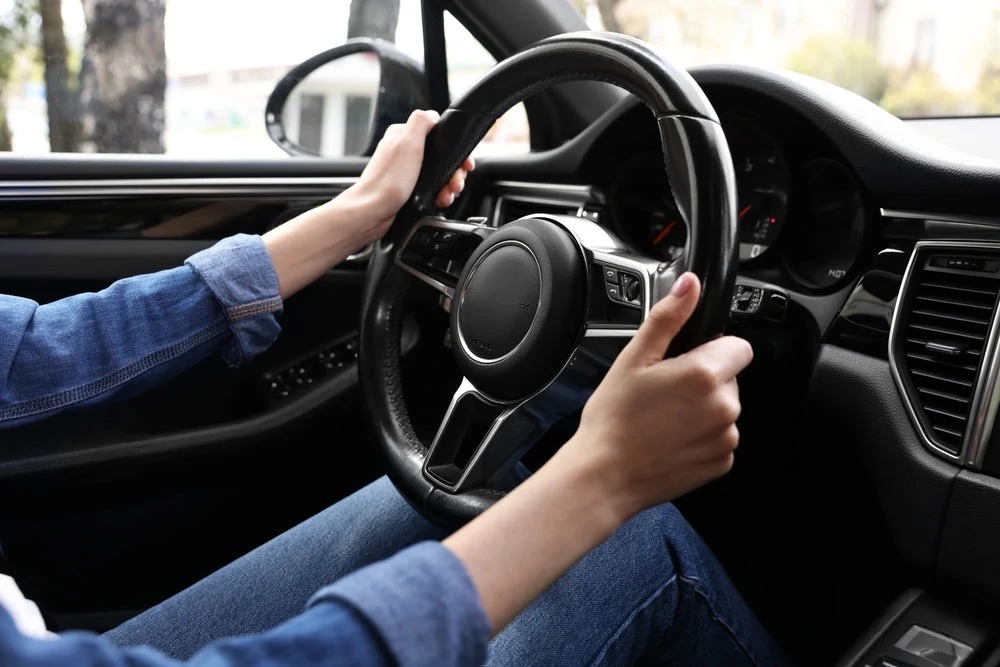
You get into your car, insert the key or press the start button, and suddenly the steering wheel will not move. In some cases, the key will not turn either. It can feel like something has broken, but a locked steering wheel is often simply the vehicle’s built-in anti-theft system doing exactly what it was designed to do.
Knowing how to unlock a steering wheel safely can save you time, frustration, and an unnecessary repair bill. The correct solution, however, depends on the type of vehicle you drive, whether you use a traditional metal key, transponder key, key fob, or push-button start, and whether the problem is mechanical or electronic.
This guide explains why steering wheels lock, how to unlock them on different types of cars, common troubleshooting techniques, safe “hacks” that may help, mistakes to avoid, and when it is time to call a professional locksmith.
A steering wheel lock is primarily an anti-theft feature. Depending on the vehicle, the system may be mechanical, electronic, or integrated with the ignition and immobiliser.
On many traditional keyed vehicles, the steering wheel can lock when the ignition is switched off, and the wheel is moved after the key has been removed. A locking pin engages inside the steering column and prevents the wheel from rotating normally.
Modern vehicles may use an electronic steering column lock, often abbreviated as ESCL or ESL. These systems can communicate with the key fob, ignition module, immobiliser, battery, and vehicle computer before releasing the steering column.
A locked steering wheel does not necessarily mean anything is damaged.
Common causes include:
The normal steering-lock mechanism has engaged.
Pressure from the front wheels is loading the steering lock.
The ignition key is worn or damaged.
The ignition cylinder is worn or sticking.
The wrong key is being used.
The key fob battery is weak or dead.
The vehicle’s 12-volt battery is discharged.
The electronic steering lock has malfunctioned.
The immobiliser does not recognise the key.
The vehicle is not properly in Park.
A push-button-start vehicle is not detecting the key fob.
Understanding which situation you are dealing with makes troubleshooting much easier.
Before trying any steering-wheel unlocking procedure, make sure the vehicle is in a safe location.
Put an automatic vehicle in Park. For a manual-transmission vehicle, engage the parking brake and place the transmission in neutral unless the manufacturer specifies otherwise.
If the vehicle is stopped beside a busy road, prioritise your personal safety. Turn on the hazard lights if appropriate and move yourself and your passengers away from traffic if remaining inside the vehicle would be dangerous.
Do not use excessive force on the steering wheel, ignition key, start button, or steering column.
Aggressive force can:
Snap a key inside the ignition.
Damage ignition-cylinder wafers.
Break steering-column components.
Damage an electronic steering-lock actuator.
Create a significantly more expensive repair.
Make the car impossible to start even after the original problem is corrected.
If anything feels mechanically jammed rather than simply locked, stop forcing it.
This is one of the most common situations.
You may notice that:
The steering wheel moves slightly in one direction but not the other.
The ignition key will not turn.
The wheel feels firmly locked.
Usually, tension between the steering wheel and the locking mechanism prevents the ignition cylinder from releasing.
Insert the vehicle’s key fully into the ignition.
Do not force it.
If the key does not enter normally, inspect it for bending, heavy wear, dirt, or damage.
Gently move the steering wheel left and right.
A locked steering wheel will often have a small amount of movement in one direction while feeling completely solid in the other.
The direction with slight movement is usually the direction you need.
Hold the steering wheel toward the direction in which it has a little movement.
Do not violently shake or jerk it.
Maintain steady pressure.
While maintaining gentle pressure on the steering wheel, turn the key toward the ACC or ON position.
When the pressure on the locking pin is relieved, the ignition should turn, and the steering wheel should unlock.
This is the safest and most effective solution for many traditional keyed vehicles.
One common piece of advice is to violently wiggle the steering wheel while turning the key.
That is unnecessary.
A better technique is to determine which direction the wheel still moves slightly, hold it toward that direction, and gently turn the ignition key at the same time.
The objective is not to overpower the lock. It is to remove pressure from the locking mechanism.
That small distinction can make the process considerably easier.
If relieving pressure from the steering wheel does not work, the steering lock may not be the only problem.
Inspect the key.
A heavily worn car key may no longer align the internal components of the ignition cylinder correctly.
Compare your everyday key with a spare if you have one.
If the spare works normally, your primary key may need replacement.
Never aggressively twist a stubborn key. Breaking a key inside the ignition can turn a simple lock problem into a much more complicated extraction and repair job.
Push-button-start vehicles operate differently because there may be no traditional ignition cylinder.
The vehicle must electronically authenticate the key fob before allowing the steering lock to release and the engine to start.
Bring the key fob into the driver’s area.
Do not leave it in the trunk, outside the vehicle, or near another electronic device that could potentially interfere with detection.
For most automatic vehicles, press and hold the brake pedal.
Some manual vehicles require the clutch pedal instead.
Apply gentle left-right pressure to the steering wheel while pressing the start button.
Again, the purpose is to remove load from the steering lock—not to force it.
Look at the dashboard.
Messages such as:
Key Not Detected
No Key
Key Battery Low
Steering Lock Malfunction
Steering Lock Active
Press Brake to Start
can provide important clues.
Follow the vehicle manufacturer’s instructions displayed on the instrument panel when available.
A weak key-fob battery is a common reason a push-button-start vehicle may fail to recognise its key.
Many manufacturers provide a backup method for starting the vehicle when the fob battery is weak.
Depending on the car, this might involve holding the fob close to a designated area such as the start button or another specified location.
Because that procedure varies by manufacturer and model, check the owner’s manual rather than guessing.
Replacing the key-fob battery may solve the problem immediately if the battery is depleted.
Modern electronic steering locks depend on electrical power.
If the 12-volt vehicle battery is severely discharged, the steering lock may not release even if the key fob itself is working.
Possible symptoms include:
No dashboard lights.
Clicking when attempting to start.
Dim interior lights.
No response from the start button.
Electronic steering-lock warnings.
Central locking behaving inconsistently.
In this situation, solving the battery problem may also solve the steering-lock problem.
If you know how to safely jump-start your specific vehicle, follow the manufacturer’s procedure.
Be especially cautious with hybrids, EVs, luxury vehicles, and vehicles with batteries located in unusual positions. Incorrect jump-starting can damage sensitive electronics.
If you are uncertain, use roadside assistance or an automotive professional.
In an automatic-transmission vehicle, the ignition and steering system may also interact with the gear selector.
Confirm that the transmission is fully in Park.
If the vehicle does not recognise Park, it may refuse to release certain ignition or starting functions.
With your foot on the brake:
Confirm the shifter is firmly in Park.
Gently relieve pressure from the steering wheel.
Insert and turn the key or press the start button.
Check the dashboard for warning messages.
Never attempt to move or manipulate the transmission mechanism in ways not recommended by the manufacturer.
Manual cars typically require a slightly different starting procedure.
Secure the vehicle with the parking brake.
Depending on the model, press the clutch pedal fully before attempting to start.
For a traditional key ignition:
Insert the correct key.
Determine which direction the steering wheel moves slightly.
Hold light pressure in that direction.
Depress the clutch if required.
Turn the ignition key normally.
For push-button manual vehicles, follow the manufacturer’s clutch-and-start procedure.
Electronic steering locks are increasingly common.
Instead of a purely mechanical locking pin controlled directly by the ignition key, an electronic actuator locks and unlocks the steering column.
If the system is working correctly, it normally releases automatically after detecting an authorised key and receiving the required start command.
Problems can arise from:
A weak vehicle battery.
Low system voltage.
A weak key-fob battery.
Key-recognition problems.
Wiring or communication faults.
A faulty steering-lock module.
A failing actuator.
Immobiliser faults.
Control-module errors.
If normal battery, key-fob, and steering-pressure checks do not solve the problem, professional diagnostic equipment may be required.
Attempting to dismantle or bypass an electronic steering-lock system is not recommended. These systems are connected to the vehicle’s security architecture and can be expensive to damage.
Older vehicles frequently use a straightforward mechanical steering-lock and ignition-cylinder arrangement.
The basic pressure-relief technique usually works:
Insert the key.
Test the steering wheel gently in both directions.
Apply light pressure toward the direction with available movement.
Turn the ignition key.
Older ignition cylinders can also wear significantly over time.
If a key only works when positioned a certain way or needs repeated manipulation, have the key and ignition inspected before the problem becomes a complete failure.
Luxury vehicles may use more sophisticated electronic steering-column locks and keyless-access systems.
Manufacturers may integrate the steering lock with:
The immobiliser.
Keyless-go systems.
Body-control modules.
Electronic ignition switches.
Alarm systems.
Vehicle security networks.
As a result, what appears to be a simple steering lock may actually be an electronic authorisation problem.
Avoid experimenting with wiring, steering-column modules, relays, or anti-theft components.
A locksmith with automotive diagnostic and key-programming equipment may be able to identify whether the problem involves the key, battery, ignition system, or steering-lock module.
Hybrid and electric vehicles can also experience steering-lock or key-detection problems.
Although these cars have high-voltage propulsion batteries, many still rely on a conventional low-voltage battery for control systems, locks, computers, and vehicle startup authorisation.
A depleted low-voltage battery can therefore cause symptoms that may initially appear unrelated.
Do not work on high-voltage EV or hybrid components yourself unless you are properly trained.
The orange high-voltage cables and traction-battery components should be left to qualified technicians.
Some simple troubleshooting tricks are worth trying before calling for assistance.
Turn the wheel gently toward the direction where it has slight movement while turning the ignition.
This is often all that is required.
If your vehicle has a conventional key and the primary key is badly worn, try the spare.
If the spare works immediately, the everyday key may be the real problem.
For keyless vehicles, a weak fob battery can cause inconsistent key detection.
Replacing the battery is inexpensive and may restore normal operation.
Many vehicles provide a backup method for detecting a key fob with a weak battery.
Consult the owner’s manual to identify the correct location.
On automatic vehicles, move the selector firmly into Park before trying again.
Do not force the selector or attempt to defeat the shift interlock.
If several electrical systems are acting strangely at once, the steering lock may only be one symptom of a weak vehicle battery.
A car parked against a curb or with the wheels sharply turned may place considerable pressure on the steering-lock mechanism.
Relieving that pressure gently while operating the ignition may help.
Online videos sometimes recommend methods that involve forcing, breaking, drilling, disassembling, or bypassing steering-lock and ignition systems.
Avoid them.
Do not:
Drill the ignition.
Break the steering lock.
Force the key with pliers.
Hammer the ignition cylinder.
Cut steering-column components.
Manipulate anti-theft wiring.
Attempt to defeat the immobiliser.
Short electrical connections together.
Remove electronic steering-lock modules without proper procedures.
Use improvised tools inside the ignition.
Apart from potentially damaging the vehicle, modern security systems are deeply integrated with the vehicle’s electronics. A damaged security module may require programming, component replacement, or dealership-level diagnostics.
Be cautious.
If an ignition cylinder feels sticky, do not automatically spray household oil, penetrating oil, or other random lubricant into it.
Some products attract dirt or leave residue that can worsen the problem.
If ignition-cylinder lubrication is appropriate, use only a lock lubricant suitable for that application and follow the vehicle or lock manufacturer’s recommendations.
If the cylinder is already failing, lubrication will not repair worn mechanical components.
A key stuck in the ignition may indicate a different problem.
First, confirm that the vehicle is fully in Park.
Then gently move the steering wheel while attempting to rotate the key back to the correct removal position.
Do not pull hard on the key.
Other potential causes include:
A worn key.
A damaged ignition cylinder.
A shifter-position problem.
A failing ignition interlock.
Debris inside the cylinder.
If the key feels likely to snap, stop and call a locksmith.
Removing a complete key is much easier than extracting half of one from deep inside an ignition cylinder.
Do not push the broken piece farther into the cylinder.
Avoid attempting extraction with knives, screwdrivers, glue, or other improvised tools. These methods can damage the cylinder or make professional extraction more difficult.
An automotive locksmith can often extract a broken key using specialized tools and may also be able to cut a replacement.
If your steering wheel locks normally after you park and then releases correctly when you restart the car, there may be nothing wrong.
However, repeated difficulty unlocking it can indicate an underlying issue.
Possible causes include:
A badly worn key.
A worn ignition cylinder.
A failing electronic steering lock.
Low battery voltage.
Key-fob communication problems.
Electrical faults.
Steering-column problems.
Repeated symptoms should be investigated before you eventually become stranded.
Cold weather can worsen existing mechanical or electrical problems.
A weak vehicle battery produces less effective output in very cold conditions, while moisture or existing wear may also make mechanical components behave differently.
If the problem occurs primarily on cold mornings, have the battery and ignition system inspected rather than assuming the steering wheel itself is defective.
A properly functioning factory steering-lock system is designed around the vehicle’s ignition and security state, not ordinary driving.
If your steering suddenly becomes difficult while the vehicle is moving, treat it as a potential steering-system failure rather than assuming the parking steering lock has engaged.
Reduce speed safely, move out of traffic if possible, stop the vehicle, and arrange professional assistance.
Do not continue driving a vehicle with abnormal steering behaviour.
This is particularly common.
When a vehicle is parked with its front wheels turned sharply—especially when a tyre rests against a curb—the steering system can remain under load.
After switching the ignition off, that load can press strongly against the steering-lock mechanism.
When you return to the vehicle, the key may appear stuck.
Apply gentle steering pressure in the direction that reduces the load while turning the ignition.
Do not use excessive force.
When both problems happen together, work through the basics systematically.
Check:
Is the correct key or fob present?
Is the transmission in Park?
Is the brake or clutch pedal fully pressed?
Does the steering wheel have slight movement in one direction?
Does relieving steering pressure allow the ignition to operate?
Does the dashboard show a key, battery, or steering-lock warning?
Is the key fob battery weak?
Is the vehicle’s 12-volt battery discharged?
Does a spare key work?
If none of these resolves the problem, you may have a mechanical ignition, immobiliser, or electronic steering-lock fault.
If the key turns but the steering wheel remains locked, do not continue applying force.
The steering-lock mechanism may not be disengaging correctly.
Depending on the vehicle, this can involve:
Mechanical steering-lock components.
The ignition housing.
An electronic steering-column lock.
An actuator.
An electrical fault.
A professional inspection is advisable.
If the steering wheel moves freely but the ignition key will not rotate, the steering lock may not be the problem at all.
Possible causes include:
A worn key.
A damaged ignition cylinder.
Dirt or internal wear.
An incorrect key.
Gear-selector interlock issues.
Try the spare key if available.
If both keys behave the same way, the ignition cylinder should be inspected.
Not every steering-wheel lock can be prevented because the lock itself is a normal security feature.
You can, however, reduce unnecessary problems.
Avoid hanging an excessively heavy keychain from a traditional ignition key. Additional weight can contribute to long-term wear in some ignition systems.
Replace severely worn or bent keys before they fail.
Keep a functioning spare key available.
Replace key-fob batteries when low-battery warnings appear.
Keep the vehicle’s 12-volt battery in good condition.
If the ignition begins sticking or the vehicle intermittently fails to recognise the key, address the issue early.
A small intermittent problem can eventually become a no-start situation.
Professional help is appropriate when normal owner-level troubleshooting does not work.
Consider calling an automotive locksmith if:
The key will not turn after releasing steering pressure.
Your key is damaged or badly worn.
The key has broken in the ignition.
You have lost the vehicle key.
The ignition cylinder appears damaged.
The vehicle does not recognise an authorised key.
You need a replacement or programmed key.
The steering lock repeatedly fails to release.
You suspect an ignition or electronic steering-lock problem.
You are concerned that further attempts could damage the vehicle.
A qualified automotive locksmith can inspect the key, ignition, steering lock, and related security components while minimising unnecessary damage.
Not every locked-steering situation is a locksmith problem.
You may need a mechanic or dealership if diagnostics reveal a failure involving:
Steering-column electronics.
Steering-angle sensors.
Power-steering components.
Control modules.
Wiring.
Mechanical steering-system components.
Manufacturer-specific electronic faults.
In some situations, an automotive locksmith can diagnose the problem first and tell you whether a mechanical repair shop is required.
The steering lock may be under pressure. Gently move the steering wheel toward the direction where it has slight movement while turning the ignition key.
If this does not work, the key or ignition cylinder may be worn or damaged.
Yes, on vehicles with electronic steering locks, insufficient 12-volt power can prevent the steering-lock actuator and other vehicle computers from operating normally.
It can help if the problem is being caused by poor key-fob detection. If the vehicle still does not recognise the fob afterwards, further diagnosis may be necessary.
No.
Use only moderate, controlled pressure. The goal is to remove tension from the lock, not overpower it.
If you have lost the authorised key, contact an automotive locksmith, roadside assistance provider, or dealership with proof of ownership.
Do not attempt to bypass the steering lock or immobiliser.
This may be completely normal. Many vehicles are designed to lock the steering column when the ignition is off and the steering wheel is moved.
Depending on the cause, yes.
Automotive locksmiths commonly work with vehicle keys, ignition cylinders, key programming, key extraction, and certain steering-lock or immobiliser-related issues.
The price depends on what is actually wrong.
Releasing an ordinary steering lock is very different from replacing a broken key, repairing an ignition cylinder, programming a new key, or diagnosing an electronic steering-lock fault.
A professional will usually need to identify the cause before giving an accurate repair price.
If your steering wheel will not unlock, your key will not turn, your key has broken in the ignition, or your car is refusing to recognise its key, repeatedly forcing the system can make the problem worse.
H Locks can help diagnose vehicle lock, key, and ignition problems and determine the safest way to get you moving again.
Whether you are dealing with a traditional ignition key, transponder key, remote fob, push-button start, damaged ignition, broken key, or an unexpected vehicle lockout, getting professional assistance can prevent unnecessary damage to your steering column and security system.
Contact H Locks for automotive locksmith assistance and let an experienced professional properly inspect the problem.